
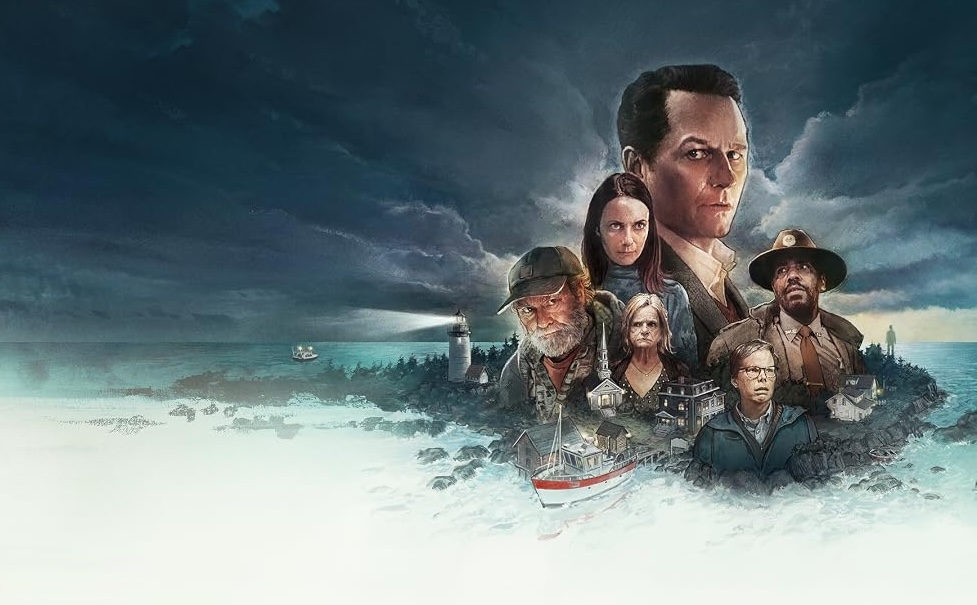


- Director: Katie Dippold
- Original Title: Widow’s Bay
- Original Language: English
- Release Year: 2026
- IMDB Rating: 8.1
«I was just about to show Arthur the witch trial, yeah. Great source of pride. We caught ‘em, we burned ‘em...»
I heard about the Emmy wins first thing this morning — among the first things I caught was that Matthew Rhys had walked up to collect his statue for playing a mayor who sells a cursed island as «the next Martha’s Vineyard.» A few minutes later, Spanish radio was back on its usual subject — the housing crisis, the one mass tourism keeps driving deeper every year. The two stories had nothing to do with each other in whatever order the newsroom ran them. I heard them back to back from the Costa del Sol, one of the areas hit hardest in Spain, alongside Barcelona — the city I’ve just moved from — and couldn’t hear them as anything but the same story told twice. The show walked away with six trophies that night — Comedy Series, Directing, Writing, two Supporting acting wins, and Lead Actor — losing only Lead Actress, which went to Jean Smart. Reality, meanwhile, is still waiting for its season finale.
Full disclosure before I make my case: I’ve had a soft spot for Rhys since The Americans. But what actually holds Widow’s Bay up isn’t just him. Katie Dippold had been turning this story over for almost twenty years — it started as a joke-heavy pilot and ended up, in her own words, somewhere she «wanted the tension and the stakes to be taken seriously.» Each episode works almost like a self-contained dive into a different horror subgenre without losing the season’s thread. A good example is episode 7, «Seasickness» — my favorite in a season where nothing dips below excellent — where Tom and Wyck take the island’s three-hundred-year-old founder out by boat, still alive on the strength of his own pact, to push him past the island’s boundary and finally let him die. It’s where the show hits its finest balance: the genuine dread of being alone at sea with something that shouldn’t still be breathing, and the social comedy of still treating him with courtesy while he fights not to. And director Hiro Murai — the same instincts we already knew from Atlanta and Barry — builds the show on what he calls a «plain-spoken» visual language: ground the extraordinary in the everyday, so that when the genre element shows up, it lands like a real jolt instead of an announced effect.

Rhys, for his part, has said he refused to play Loftis as a coward: he sees him as someone «obstructive because he wants to stay tunnel-visioned,» and has talked about building the character out of something of Brody’s protectiveness and something of Vaughn’s ambition from Jaws — the same Vaughn who silences the shark warnings because the Fourth of July needs full beaches. Loftis does exactly that with the supernatural: every time the fear threatens to scare off the tourists, he decides it’s exaggeration, superstition, bad press. That double lineage is, without Rhys framing it this way himself, the show’s real political point: the monster is never the actual antagonist. The antagonist is the math — how many lives a profitable season is worth — and Widow’s Bay has the good taste to let the actor say it first.
What hooks you, beyond the Brody-Vaughn lineage, is that the show resurrects a formula we hadn’t seen in twenty years — the family-friendly blend of adventure, mystery, and horror that Spielberg, Richard Donner, and Joe Dante defined in the ’80s, where the scares came with heart and community, not just dread. The ’90s fractured that into the self-aware irony of Scream; the 2000s hardened it into the torture porn of Saw or the found-footage grain of The Blair Witch Project; mystery mutated into the adult psychological gut-punch of Fincher or Shyamalan; and adventure dissolved into digital spectacle, from Jurassic Park onward to Marvel, trading the small, close-knit community for scale. That Stranger Things, and now Widow’s Bay, are the ones cleaning up isn’t a coincidence — it’s CGI fatigue meeting generational nostalgia.

The season resolves its bloodline mystery with a twist that actually earns itself: Ruth (K Callan), the old woman everyone assumed was the last descendant of the founding pact, turns out not to be — the lineage runs, without her knowing it, through Tom’s own son. Sheriff Bechir kills her anyway, convinced it’ll stop the storm bearing down on them. It doesn’t. What was underneath was worse: a sealed labyrinth holding something that’s been waiting generations for eight human sacrifices, and the bell tolls eight times to announce it. It’s an ending that offers no comfort, and the show is right not to give you any.
Spain has been running Loftis’s math for sixty years without needing a demon underground. «Sun and beach» tourism wasn’t some spontaneous market impulse — Franco’s regime designed it as a foreign-currency strategy once the dictatorship’s international isolation started choking it. Sixty years later, we’re still running on that same blueprint — the pitch just comes from a consultancy now instead of a Francoist minister.
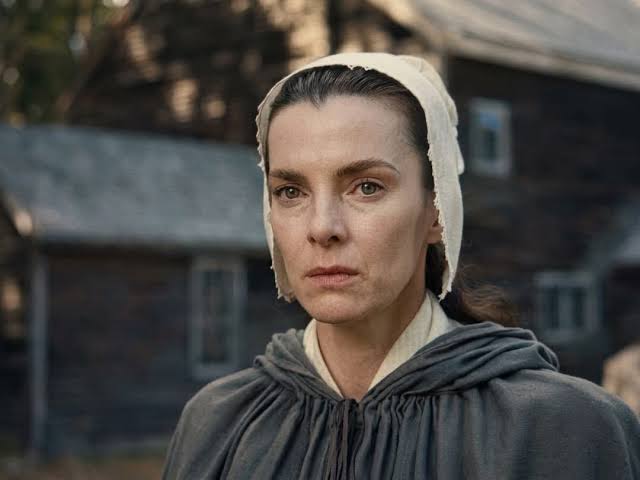
This summer’s numbers don’t need literary interpretation: 96.8 million tourists in 2025, €134.7 billion in spending, and an average public approval of the sector that collapsed to 4.3 out of 10 over the summer months. The Balearics banned new tourist-flat licenses. Barcelona announced it will eliminate them entirely by 2028. Madrid rolled out its Plan Reside to stop the bleeding downtown. And this summer, while Widow’s Bay was sweeping the Emmys, Málaga, Seville, Granada, Córdoba, Cádiz, the Canaries, the Balearics, San Sebastián, and Barcelona itself all took to the streets to say, each in its own way, the line nobody in the fiction dares say out loud until the last episode: this isn’t sustainable, and we knew it from the start.
They call the show horror-comedy. Over here, they call it «turismofobia» — tourism-phobia, the word that turns the person who can’t afford their rent anymore into the problem, instead of the model that decided their neighborhood was, first and foremost, a product.
8/10 — same score I gave it on FilmAffinity. I’ll stand by it for Rhys, for Dippold, for Murai, and for letting a town with a monster in its basement come off, next to the Spanish coast this summer, almost honest.
Deja un comentario