

Lee este artículo en castellano: Imaginad que lo hubiera hecho Irán.
Try a small thought experiment. Imagine that in the space of one week, Iran, or Cuba, or North Korea, or China, had strapped a woman to a gurney, stuck her with seven needles until one of them came out bent at a right angle, pumped two doses of poison into her, failed to kill her, and sent her to hospital on a ventilator, shackled to the bed. Then imagine that, a few days later, the same government had announced, with visible pleasure, that a man would be shot by a squad of soldiers at one o’clock in the afternoon, and that the whole thing would be streamed live for the public to enjoy.
You already know what would happen next. Breaking news banners. The faces of the evening news doing their gravest voice. Influencers with a candle emoji in the bio. Pro-life movements discovering, for one afternoon, that life is also sacred after birth. Emergency sessions in Brussels, a sanctions package, a resolution in the European Parliament with the words «barbaric» and «regime» in the first paragraph. Second-rate politicians in every European capital reading a trembling statement about dictatorship, repression and the values that unite us.
Now stop imagining. Both things happened. In the same week. In the United States of America.
And the answer was nothing. Nothing at all.

The woman who would not die
On the night of 30 September, the State of Tennessee tried to kill Christa Gail Pike, 50, sentenced to death for a murder committed in 1995, when she was eighteen. She was to be the first woman executed in Tennessee in more than two centuries and the only woman on the state’s death row. Her lawyers had warned, in writing and in advance, that her veins were hard to find and that lethal injection would be a problem. The state went ahead anyway.
What followed is on the record, because her lawyers forced a judge to order the evidence preserved. The execution team tried at least seven needles to get an IV line in. One of them was removed bent at a ninety-degree angle. Pike, strapped to the gurney, asked them to try higher up on her shoulder. They injected the first dose of pentobarbital. Then the second, the backup the protocol allows. Media witnesses reported that she was still alive and snoring. Her lawyers filed an emergency motion saying exactly that. The protocol, the Department of Correction explained afterwards, does not allow for additional procedures. There is simply no page in the manual for what happens when the second injection fails.
So they stopped. Emergency vehicles arrived at Riverbend Maximum Security Institution. Pike was taken to hospital, unconscious, on a ventilator, and shackled to the bed. The Death Penalty Information Center says she is the first person in the history of American capital punishment to survive after being injected with lethal drugs. Governor Bill Lee ordered a third-party investigation and halted executions in the state for the rest of the year. It is the second time during his tenure he has had to do that; an earlier review found the state was not following its own protocol and had mishandled the drugs. In May, another botched attempt in the same state ended with a man given a one-year reprieve.
One more detail, because it is the one that stays with you. Before all this, Pike had asked to be shot by an all-female firing squad instead. She said she feared the injection would be too painful.
She was right. And one week later, Texas executed Jamaal Howard with the same drug. The system did not pause to reflect. It did not even pause.

Death at one o’clock, now streaming
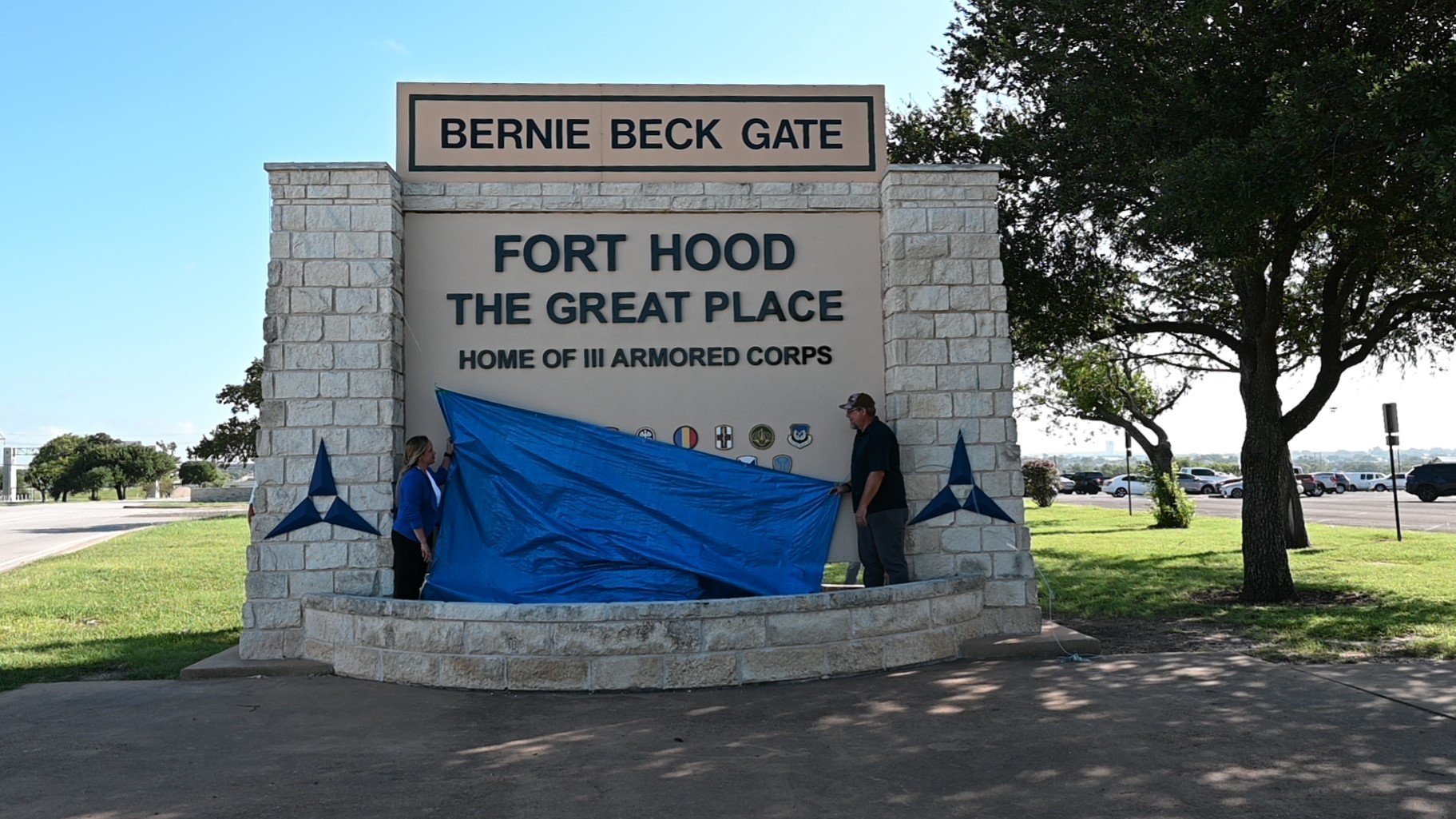
Eight days after Tennessee failed to kill a woman, the Pentagon announced how it intends to kill a man. Nidal Malik Hasan, a former Army psychiatrist convicted of killing thirteen soldiers at Fort Hood in 2009, will be executed by firing squad on 3 December. It will be the first execution carried out by the US military since 1961, and the first by firing squad since Private Eddie Slovik was shot for desertion in 1945. Under military law a president has to sign off on a firing squad personally. Donald Trump did. Asked on Friday whether he had also approved live-streaming it, he answered with one word: absolutely.
The choreography is deliberate and they are proud of it. Pete Hegseth, the Secretary of Defense, explained that the execution would take place at Fort Hood, on a Thursday, at one in the afternoon, because that is where, and when, Hasan opened fire. He called the decision a no-brainer. Asked whether Hasan had made any final requests, he said he did not care. He promised that people would be able to watch, and the Pentagon duly confirmed that the killing would be live-streamed, details to follow. The Secretary of Defense of the most powerful state on earth went on a right-wing talk show to advertise a public execution like a pay-per-view fight.
This is not about Hasan. It is about what a state reveals about itself when killing a prisoner is not enough, and the killing has to be scheduled for symbolic resonance and broadcast for the satisfaction of the audience. A country does not do that by accident. It does it because it wants to, because its public wants to watch, and because nobody with any power is going to stop it.
The United Nations human rights office issued a statement. It said that streaming an execution amounts to a public execution and breaches the absolute prohibition of torture. Washington did with it what Washington does with every statement from the United Nations, on Gaza, on Cuba, on Iraq, on anything: nothing. The Pentagon did not even bother to answer. That is the measure of the institution. It can describe torture with precision and prevent none of it, and in December it will still be issuing statements while the rifles are being loaded.

The sound of Brussels not speaking
In March of this year, Iran executed a Swedish citizen. Within hours, Kaja Kallas, the European Union’s High Representative, issued a statement calling it a brutal act of senseless violence, demanding that Iran halt all executions and abolish the death penalty, and declaring that the rise in executions showed the true face of the regime. That is the standard script. The EU, we are told constantly, opposes capital punishment at all times and in all circumstances. It is in the treaties, in the Charter of Fundamental Rights, in the Action Plan on Human Rights, in every statement the External Action Service has ever issued about a hanging in Tehran, a beheading in Riyadh or a firing squad in Sana’a.
So here is a fair question. Where is the statement on Christa Pike? Where is the statement on a live-streamed firing squad? I have looked. If the High Representative has said anything about a woman surviving two doses of poison in Tennessee, or about the Pentagon turning an execution into a broadcast, it has been said quietly enough that I cannot find it. Brussels, which never runs out of words when the executioner is in Iran, has apparently mislaid them.
This is not an oversight. It is a policy. The European Union’s opposition to the death penalty is sincere exactly up to the point where it would cost something, and it costs nothing to lecture Tehran. Lecturing Washington, with American troops on European soil, American gas in European pipelines and American permission required for European foreign policy, is a different matter. So the principle that was absolute, universal and non-negotiable on Monday becomes, by Thursday, a regrettable internal affair of a sovereign ally with a different legal tradition.
The same goes for the rest of the outrage industry. The pro-life movements that can fill a square over an embryo have not filled anything over a woman on a ventilator. The columnists who know the name of every Iranian protester on death row would struggle to spell Riverbend. The influencers who change their profile picture for the right kind of victim have found nothing here to change it for. The victim is in the wrong country, killed by the wrong government, and that makes her not a victim but a footnote.
When the executioner is an enemy, the execution is proof of what they are. When the executioner is a friend, the execution is a complicated domestic matter on which it would be inappropriate to comment. That is the whole rule. Everything else is press release.
Alone in the hemisphere
Nor is any of this an aberration. Amnesty International’s own report on 2025 recorded 47 executions in the United States, nearly double the previous year, close to half of them in Florida. For the seventeenth year running, the United States was the only country in the Americas, from Alaska to Tierra del Fuego, to put a prisoner to death. Cuba, which the same Western press has been calling a dictatorship for sixty-five years, has not executed anyone since 2003.
And 2026 is on course to be worse. Twenty-eight executions by the end of September. Florida on a conveyor belt. Alabama experimenting with nitrogen gas. South Carolina bringing back the firing squad in 2025 after fifteen years. Tennessee unable to follow its own protocol twice in one year. And now the federal government adding a camera. Lethal injection, the humane method, fails more than seven per cent of the time, the worst record of any method. The response has not been to stop. It has been to shop for other methods.
And watch what Amnesty does with its own numbers. Its report leads with Iran, then Saudi Arabia, and names the United States last, in passing, at the end of a list. Its figures on Iran travel straight into European sanctions packages and Security Council speeches. Its figures on the United States travel nowhere. The organisation knows exactly which of its numbers will be used and which will be filed, and it writes the report accordingly. That is not monitoring. That is supplying ammunition to one side and calling it neutrality.
This is the record of the country that issues the certificates of democracy for everyone else.
What the outrage is for
It would be comforting to call this hypocrisy and leave it there. Hypocrisy suggests a gap between principle and behaviour, a failure to live up to something. What we are looking at is not a failure. It is a mechanism working exactly as designed.
The Western indignation machine does not exist to oppose the death penalty, or torture, or repression. It exists to produce a particular kind of knowledge: the knowledge of who the enemy is. An execution in Iran is useful because it feeds a story written long before the execution: the regime, the mullahs, the barbarism, the whole catalogue that justifies sanctions, isolation and, when the moment comes, bombs. That story is not a description of Iran. It is a prerequisite for war with Iran, and it gets fed whatever Iran does. An execution in Tennessee feeds nothing. It does not sell a war, it does not justify a blockade, it does not make anyone’s weapons contract more urgent. So it is filed under domestic news, local colour, a regrettable quirk of the American South, and the machine moves on.
That is why the comparison with Cuba or North Korea is not a rhetorical trick. It is the test. The same act, performed by the same kind of state apparatus on the same kind of prisoner, produces either a global scandal or a shrug, and the only variable that changes is the flag. Which means the scandal was never about the act. It was about the flag. The dead and the half-dead are raw material; what is being manufactured is consent.
The cost of this is not abstract. Every time Europe stays silent about an American execution, it tells its own citizens that human rights are a weapon, not a standard. It teaches a generation that a woman snoring on a gurney after two doses of poison is tolerable if the gurney is in Nashville and intolerable if it is in Tehran. It makes the word «regime» mean nothing more than «a government we are currently against». And it leaves the real abolitionists, the lawyers filing motions at midnight, the witnesses who testified about the bent needle, the organisations that keep the count, without the only ally that could have made a difference: an international community that meant what it said.
Ask the question this blog always asks. Who gains from the silence? Not Christa Pike. Not the thirteen dead at Fort Hood, who will not be brought back by a broadcast. Not Europe’s credibility, which dies a little more each time it speaks only when permitted. The silence serves one interest only: the one that needs the world to believe that barbarism always has an accent, and that the accent is never American.
Because that is what has to be said, and what none of them will say. This is not a country with a death penalty problem. This is a society that has made death into entertainment and calls it justice: a state that arms and finances a genocide in Gaza while its courts debate the correct dosage of poison, that cannot get a needle into a woman’s arm in seven attempts and sends her back to a cell with a bill, that schedules a shooting for one o’clock because the symbolism is good television, and that is run by men who, asked whether a condemned prisoner had any last request, say they do not care. The United States is not the leader of the free world. It is the world’s largest producer of the spectacle of punishment, and the rest of the West is its audience.
Absolutely
On 3 December, at one in the afternoon, a group of soldiers will raise their rifles at Fort Hood and a camera will be rolling. Somewhere in a hospital in Tennessee, a woman the state could not kill is waiting to find out whether it will try again. In Geneva, the United Nations will be drafting a statement. In London, Amnesty will be updating a spreadsheet. And in Brussels, the people who wrote about the true face of the Iranian regime will be at lunch.
If you want to know what a country is, do not listen to what it says about its enemies. Watch what it does to its prisoners, and then watch who looks away.
Asked whether he had approved streaming a man’s death to the world, the President of the United States said: absolutely.
Asked whether it had anything to say about that, Europe said nothing.
Both answers are honest. Only one of them was meant to be.
Sources
- NPR: Tennessee halts executions after woman survives lethal injection
- NPR: Failed ‘torturous’ execution attempt on Christa Pike reignites death penalty debate
- CNN: Christa Pike is on a ventilator and unconscious after surviving lethal injection
- CNN: The lethal injection drug used in Christa Pike’s botched execution was just used in Texas
- Al Jazeera: Christa Pike execution fails: What next when a lethal injection is botched?
- AP: Pentagon says the firing squad execution of Fort Hood shooter Nidal Malik Hasan will be livestreamed
- Reuters: US to livestream Army execution of Fort Hood shooter, Pentagon official says
- France 24 / AFP: US military to livestream firing squad execution of Fort Hood shooter
- Washington Post: Trump, asked if he approved live-streaming execution, says ‘absolutely’
- Al Jazeera: US to livestream Fort Hood shooter’s execution: Is that legal?
- Euronews: US military will livestream the firing squad execution of Fort Hood shooter, ‘torture’ for UN
- Amnesty International: Death penalty in 2025 – Facts and figures
- Amnesty International: Executions surge to highest recorded figure in 44 years
- ANSA: Kallas condemns execution of Swedish citizen in Iran, March 2026
Deja una respuesta